
What Predicts
Ironman 70.3
Performance?
The Science Behind Triathlon Results?
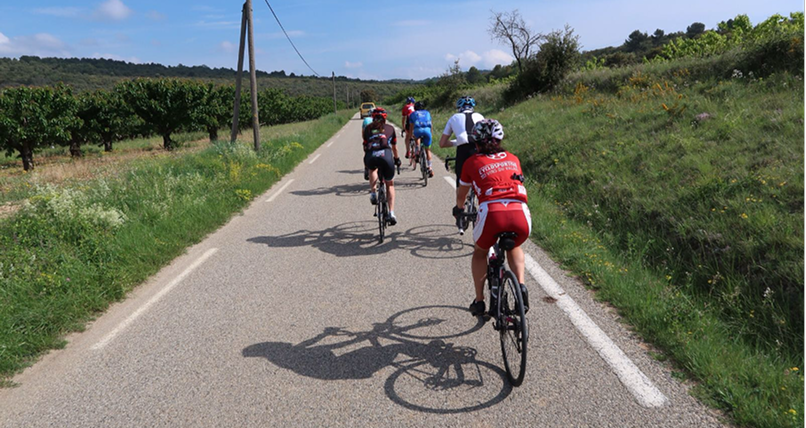
Ironman races are among the most demanding endurance events in sport. They combine three disciplines – swimming, cycling, and running – completed consecutively. Distances vary depending on the event, and the Ironman 70.3 (often called a “half Ironman”) covers half the distance of a full Ironman.
In recent years, participation in these events has expanded rapidly worldwide. More recreational athletes, first-timers, and amateur competitors are signing up than ever before. That raises an interesting question:
What actually determines performance in a race like Ironman 70.3?
Here we explore some of the science behind middle-distance triathlon performance, with a focus on insights that are particularly relevant for beginner and amateur athletes. We’ll look at physiology, training factors, and even some of the psychology that surrounds the sport.
Which Discipline Matters Most?
A common question among triathletes is simple:
Which part of the race influences the final result the most – swimming, cycling, or running?
Researchers have examined this question across different triathlon distances.
Broadly speaking, studies show:
- Olympic-distance triathlons: Running is usually the strongest predictor of final race time.
- Full Ironman races: Cycling often becomes the dominant predictor.
- Ironman 70.3: Until recently, this distance received less attention in the research literature.
More recent studies focusing specifically on the 70.3 distance suggest that cycling and running splits correlate most strongly with overall race time, while swimming is somewhat less predictive.
However, this does not mean that swimming is unimportant.
All three disciplines contribute significantly to performance, and athletes who perform well typically show balanced competence across all three. Neglecting any discipline will eventually show up in the final result.
Why Cycling Often Has the Biggest Impact
For Ironman 70.3 athletes, cycling often emerges as the strongest predictor of overall performance.
There are several reasons for this.
First, the bike leg is the longest portion of the race, meaning athletes spend the majority of the event cycling. Because so much time is spent on the bike, performance differences during this segment have a large impact on total race time.
Second, the bike segment acts as a physiological bridge between the swim and the run. Poor pacing or excessive effort during cycling can significantly compromise running performance later in the race.
For amateur athletes looking for practical improvements, this suggests that targeted improvements in cycling performance can produce meaningful gains in overall race outcomes.
The Swim Still Matters (More Than You Think)
Although the swim is often the least predictive split, it still plays an important role in the race.
Swimming and cycling involve very different biomechanics and physiological demands, and the transition between them (known as T1) can influence performance in the following stages.
Research shows that:
- How hard you swim can influence fatigue levels entering the bike.
- The physiological state created during the swim affects early cycling efficiency.
- Athletes benefit from training sessions that simulate the swim-to-bike transition.
Recent studies suggest several strategies to optimize the swim portion of the race:
- Maintaining swim intensity around 80–90% of maximal swim pace to reduce fatigue carryover.
- Using positive pacing strategies (starting slightly faster and settling later).
- Incorporating swim-to-cycle training sessions in practice.
- Using race-legal strategies such as drafting or wetsuits when allowed to reduce drag and conserve energy.
In other words, the swim is not simply about getting through the water – it sets up the rest of the race.
Key Physiological Predictors of Performance
Beyond race splits, researchers have also examined which physiological factors influence Ironman 70.3 performance.
Two variables consistently stand out.
Functional Threshold Power (FTP)
Functional Threshold Power represents the highest power output an athlete can sustain for approximately one hour.
For cycling performance in particular, FTP is one of the strongest predictors, explaining more than 60% of performance variation in some studies.
In practical terms, a higher FTP generally means an athlete can ride faster for longer without accumulating excessive fatigue.
VO₂max
VO₂max – maximal oxygen uptake – is often considered the gold standard measure of aerobic fitness.
For amateur triathletes, it remains one of the best predictors of overall endurance performance. Athletes with higher VO₂max values can sustain higher workloads across all three disciplines.
Closely related physiological markers also contribute to performance, including:
- Ventilatory thresholds
- Power output at metabolic thresholds
- Exercise economy
These measures are often assessed in sports laboratories, but the key takeaway is straightforward:
Better aerobic fitness allows athletes to sustain higher intensity for longer.
The Role of Body Composition
Body composition also influences endurance performance.
Although its effects are often indirect, favorable body composition can improve performance through relationships with key physiological variables.
For example:
- Higher lean muscle mass can support greater power output.
- Lower excess body mass can improve running economy.
- Body composition can influence VO₂max relative to body weight.
This partly explains why endurance athletes frequently include strength training in their programs – it helps support muscular development that contributes to power production.
Training Volume: Do You Need Elite Levels?
When discussing Ironman training, comparisons with elite athletes often emerge.
One frequently cited example is Kristian Blummenfelt, the Olympic and Ironman champion known for operating near the limits of human endurance performance.
During peak preparation, his training typically involves:
- 25–30 hours of training per week
- Distribution roughly:
- Cycling: 50–55%
- Running: 25–30%
- Swimming: 15–20%
- Daily energy expenditure around 5,000 -6,000 kcal
For most recreational athletes, however, such training loads are neither realistic nor necessary.
Amateur triathletes can achieve substantial improvements with far more moderate training volumes, provided training is structured and consistent.
Fueling Training and Racing
Nutrition often becomes a major concern for endurance athletes.
While fueling should match training demands, it is not necessary to obsess over exact calorie numbers.
One key finding from endurance research is that carbohydrate ingestion during exercise, even at modest levels, can prevent hypoglycemia and improve endurance performance.
Athletes should also remember that the body needs time to adapt to dietary changes. New fueling strategies should be tested weeks before competition, not during race week.
Practical Training Principles for Amateur Athletes
You do not need an elite sports laboratory or an international coaching team to improve performance.
For most amateur triathletes, focusing on a few core principles will provide significant benefits:
✔ Balance training intensity and volume
✔ Monitor sleep, fatigue, and stress levels
✔ Use technology (power meters or heart rate monitors) with proper context
✔ Periodize training around competition schedules
Consistency, rather than perfection, tends to produce the greatest long-term progress.
The Psychology of Ironman Participation
Beyond physiology, triathlon participation also reveals interesting psychological patterns.
Social media is full of athletes sharing finish-line photos, medals, and race results. Many first-time participants quickly adopt the identity of an “athlete” after completing an event like Ironman 70.3.
From a psychology perspective, this is not surprising.
Identity Formation: Completing a demanding challenge often leads people to incorporate the achievement into their self-identity. Labeling oneself as an athlete can reinforce commitment to training and physical activity.
Social Signaling: Endurance events often signal traits that are socially valued – discipline, resilience, productivity, and health. Sharing race participation can function as a form of social signaling.
Effort Justification: Training for months, waking early, and enduring difficult workouts represents a significant investment. Social psychologists note that when people invest substantial effort, they often increase the perceived value of the outcome.
External Validation: Social media platforms amplify feedback loops through likes and comments. Achievements like finishing a 70.3 naturally attract positive attention.
Narrative Building: Humans are drawn to transformation stories – going from beginner to endurance athlete. These narratives are motivating both for the individual and their audience.
Personality Traits in Endurance Athletes
Sports psychology research has also identified personality patterns common among endurance athletes.
These often include:
High conscientiousness: Triathlon training requires structure, discipline, and consistency.
Achievement motivation: Endurance athletes often enjoy measurable goals and incremental improvement.
Tolerance for delayed gratification: Training may involve months of effort before race-day rewards.
Stress regulation: Long endurance sessions can reduce anxiety, improve mood, and create mental clarity.
Final Thoughts
For amateur athletes competing in Ironman 70.3, performance is influenced by several key factors:
- Cycling performance, particularly power output
- Overall aerobic capacity (VO₂max)
- Balanced performance across all three disciplines
- Favorable body composition
- Consistent, well-structured training
Improving these areas can lead to gains in sustainable power output, cycling efficiency, and endurance capacity – characteristics commonly observed in elite triathletes.
At the same time, the psychological side of endurance sport should not be overlooked. The identity, motivation, and community that surround events like Ironman 70.3 are part of what make the experience so compelling.
And if a finish-line photo comes with a small humble brag – perhaps that’s not such a bad thing after all.
Here are a few pieces worth reading.
- Boucher VG, Caru M, Martin S-M, Lopes M, Comtois AS, Lalonde F. Psychological status during and after the preparation of a long-distance triathlon event in amateur athletes. International Journal of Exercise Science. 2021;14(5):134.
- Csanaky L, Asztalos ÁC, Tóth D, Polyák É, Figler M. Post-Exercise Nutrition Knowledge and Adherence to Recommendations Among Amateur Endurance Athletes. Nutrients. 2025;17(22):3629.
- Deugan B. Triathlete’s Preferences for Adding Strength Training to Triathlon Training Programming. 2025.
- McDonald C, Losty C, MacCarthy R. An investigation of the psychological status of amateur athletes before and after a triathlon competition. European Journal of Sport Sciences. 2023;2(3):14–20.
- Nikolaidis PT, Valero D, Weiss K, Villiger E, Thuany M, Sousa CV, et al. Predicting overall performance in Ironman 70.3 age group triathletes through split disciplines. Scientific Reports. 2023;13(1):11492.
- Sousa CV, Aguiar S, Olher RR, Cunha R, Nikolaidis PT, Villiger E, et al. What is the best discipline to predict overall triathlon performance? An analysis of sprint, Olympic, Ironman® 70.3, and Ironman® 140.6. Frontiers in physiology. 2021;12:654552.
- Thuany M, Valero D, Villiger E, Forte P, Weiss K, Andrade MS, et al. Modeling Pe2rformance in IRONMAN® 70.3 Age Group Triathletes. Sports Medicine-Open. 2025;11(1):148.
- Vivan L, dos Anjos Souza VR, Engelke P, de Lira CAB, Vancini RL, Weiss K, et al. Key factors influencing cycling performance and overall race time in the Ironman 70.3 for amateur athletes. Sport Sciences for Health. 2025;21(2):719–28.
- Wells LA, Bruce L, Hoffmann SM, Kremer P, Dwyer DB. Differences between Australian triathlon coaching practices and evidence-based training load management recommendations. International Journal of Sports Science & Coaching. 2025;20(1):92–101.